
Categories
Home Buying TipsPublished September 17, 2026
Think You’re Buying Everything Inside the Fence? What Homebuyers Need to Know About Property Surveys

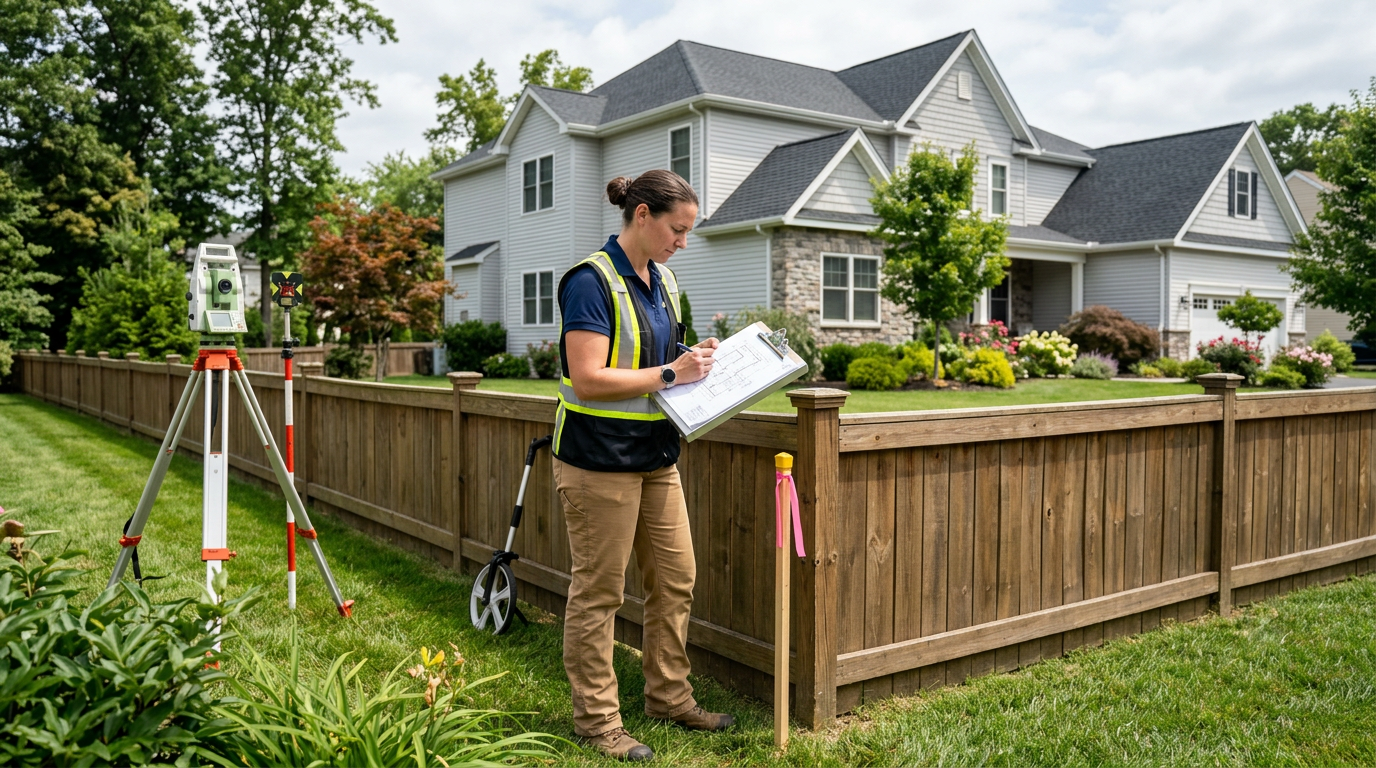
Think You’re Buying Everything Inside the Fence? You Might Be Surprised.
A fence can create a strong impression of where a property begins and ends—but it is not necessarily a legal boundary.
Before purchasing a home, it is important to understand exactly what land and improvements are included in the transaction. One of the best resources for doing that is the property survey.
What Is a Property Survey?
A property survey is a drawing prepared by a licensed surveyor that identifies the legal boundaries of a parcel. Depending on the type and age of the survey, it may also show structures and improvements located on the property, such as:
- Fences and walls
- Driveways and walkways
- Sheds, garages, and other accessory structures
- Patios, decks, and swimming pools
- Additions and porches
- Utility features and easements
- Encroachments across property lines
The survey can help you compare what you see at the property with the legal description of the land you are purchasing.
Why Fences and Property Lines May Not Match
Over time, homeowners may install fences, construct additions, widen driveways, or place sheds without confirming the exact location of the property line. In some cases, a fence may have been installed based on an assumption rather than a formal survey. Landscaping and other improvements can also gradually extend beyond a boundary.
This is particularly important in established New Jersey communities such as Millburn, Short Hills, Summit, Chatham, Maplewood, South Orange, Livingston, West Orange, Glen Ridge and Montclair. Many homes in these areas are decades old and have experienced multiple owners, renovations, and property improvements. What appears to be part of the property may not always correspond precisely with the recorded lot lines.
For example, a fence may sit several feet inside—or outside—the legal boundary. A driveway could cross onto a neighboring parcel. A shed might be located within an easement or partially over the property line. These details do not automatically mean there is a serious problem, but they are issues that should be identified and addressed before closing.
What Is an Encroachment?
An encroachment occurs when an improvement associated with one property extends onto another property. Common examples include:
- A fence crossing the boundary line
- A retaining wall extending into an adjoining lot
- A driveway partially occupying a neighbor’s property
- A deck or addition built too close to or over the property line
- A shed or garage located across a boundary
An encroachment may have existed for many years, but its age does not necessarily eliminate the need to understand it. Depending on the circumstances, it could affect future renovations, resale, financing, title insurance, or your relationship with a neighboring property owner.
Your attorney, title professional, and, when appropriate, a licensed surveyor can help explain the potential implications and identify possible solutions.
A Survey Is Not the Only Document to Review
The property survey is an important part of your due diligence, but it should be considered alongside other transaction documents. Depending on the property and circumstances, your real estate attorney may review:
- The deed and legal property description
- Title insurance documents and title exceptions
- Recorded easements and rights-of-way
- Municipal records and permits
- Zoning information
- Prior surveys
- Homeowners’ association documents, if applicable
- Property tax and assessment information
These documents may reveal rights or restrictions that are not obvious from a walk-through or online listing.
Questions Homebuyers Should Ask
As you review the property and its documents, consider asking:
- Is there a recent property survey available?
- Does the survey accurately reflect the current improvements?
- Are any fences, structures, driveways, or other improvements near the property line?
- Are there any apparent encroachments?
- Are there recorded easements or shared access rights?
- Were additions, decks, sheds, or other structures properly permitted?
- Does the survey match the legal description in the contract and title documents?
- Will a new survey be recommended or required?
- Could any boundary issue affect future construction or resale?
- Which questions should be directed to the attorney, title company, municipality, or surveyor?
The goal is not to create unnecessary concern. It is to make sure you understand the property before becoming legally and financially responsible for it.
Review the Survey Before Closing
In many transactions, buyers are focused on inspections, financing, moving plans, and closing costs. Those are all important, but the physical boundaries of the property deserve attention as well.
Do not assume that everything inside the fence is included—or that everything outside the fence belongs to someone else. Review the survey early, ask questions about anything you do not understand, and give your attorney and other appropriate professionals enough time to investigate potential concerns.
An experienced local real estate professional can help you identify questions, coordinate with the members of your transaction team, and better understand the documents involved. While your real estate agent does not replace an attorney, surveyor, title professional, or municipal official, your agent can help you navigate the process and keep important details from being overlooked.
Before you move forward with your purchase, make sure you know exactly what land and improvements you are buying.
DM me the word SURVEY, and I’ll send you my Property Survey Checklist so you know what to review before closing. Text or call me directly at 917-774-9242, or connect with one of our LuxeLife agent partners.
We are here to help you make informed decisions, ask the right questions, and move through the home-buying process with greater confidence.
Simon Westfall-Kwong
LuxeLife Real Estate Group

Simon and the LuxeLife Group
| LuxeLife Real Estate Group
or another way